
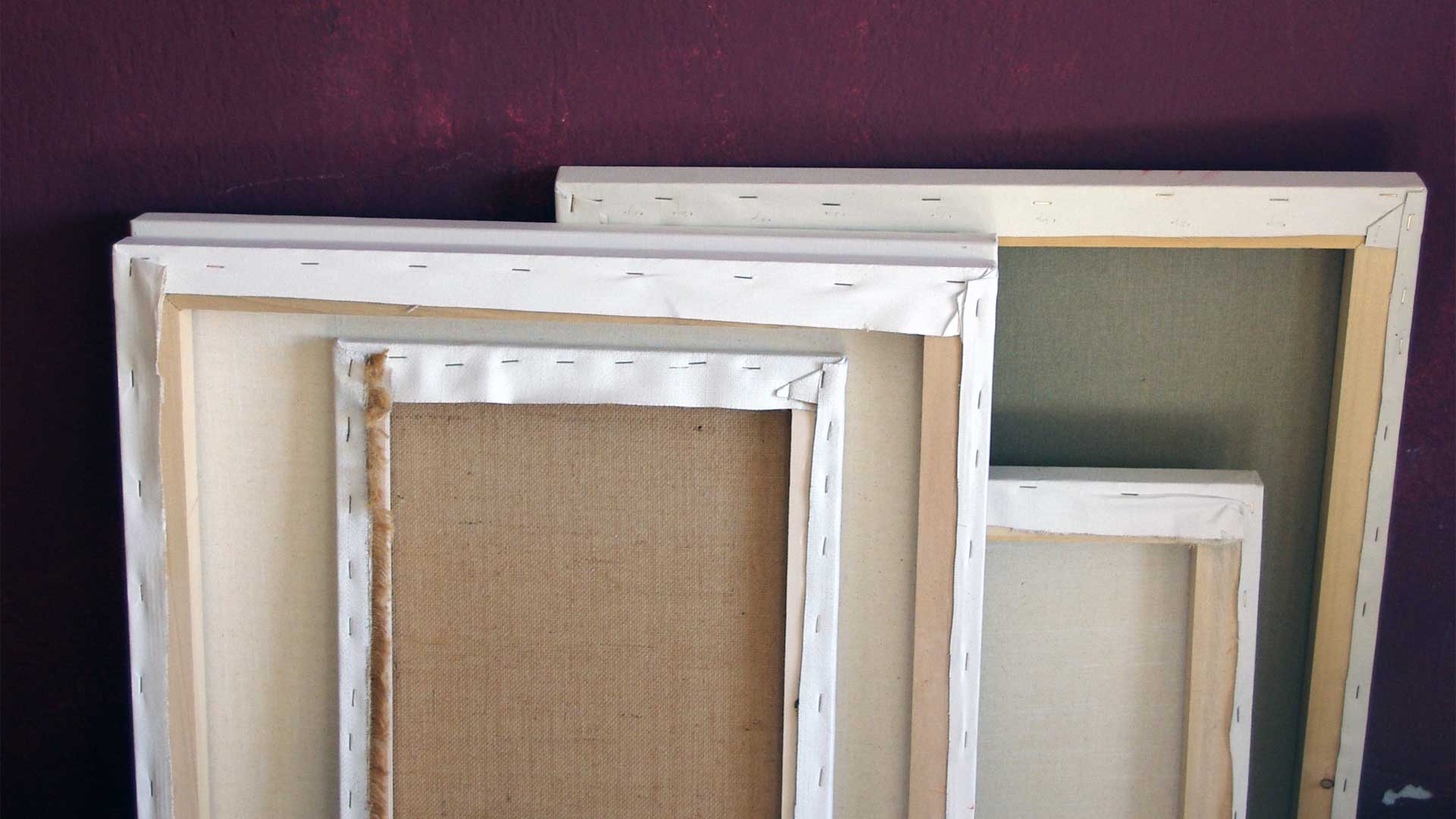
Painting canvas is woven fabric, usually cotton or linen, stretched over a wooden frame and primed for painting. Most easel paintings of the last 500 years are on it. Before canvas, European painters worked mainly on wood. Venice led the change, and the word canvas itself has a Greek root.
What this article covers:
- where the word canvas comes from and what the first canvases were made of
- what painters used before canvas, and why Venice switched to it around 1500
- how linen, cotton and jute differ, with a comparison table
- which famous paintings are on canvas and which are on wood
- what gesso does
- and how to choose between a ready stretched canvas and canvas by the metre.
Art & Colour has worked with artists’ materials since 1974, more than fifty years, and makes its stretched canvases in its own workshop with decades of experience.
Where does the term canvas come from?
Canvas comes from the Greek κάνναβις (kánnabis), hemp. The word reached English through Latin and French: the Vulgar Latin cannapaceus, “made of hemp”, gave Old French canevas and Anglo-French canevaz, and English had “canvas” by the mid-1300s. The first canvases were hemp cloth, the same heavy fabric used for sails and sacks.
Hemp stayed in painting for a long time. A study of canvases from 116 French painters found that hemp was the most common painting canvas in France until about 1800, including works by Poussin and Ingres. Linen took over in the early nineteenth century, as French hemp production fell. The two fibres look almost identical, and only a cross-section under the microscope tells them apart.
What did painters use before canvas?
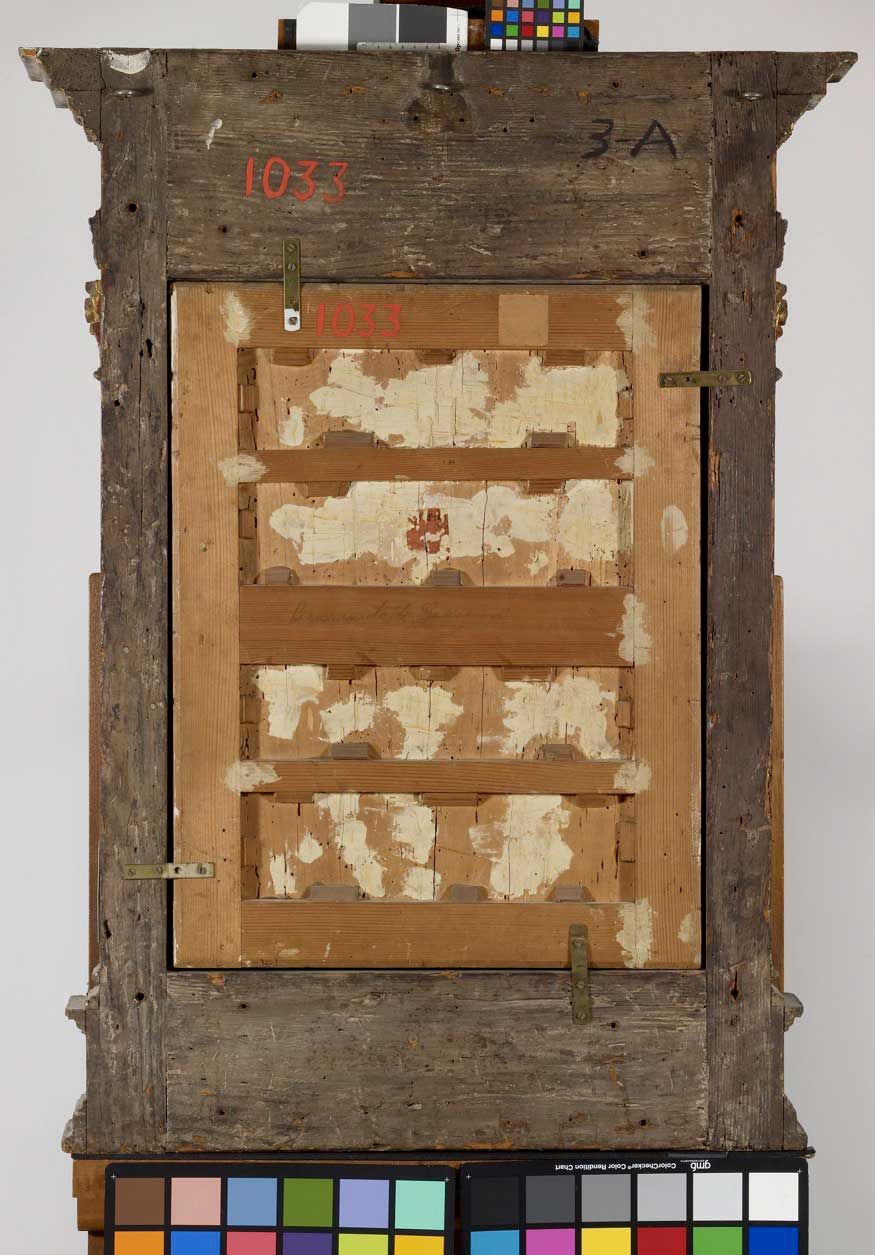
Before canvas, European painters worked on wood and on wet plaster. Italian painters mostly used poplar; in the Low Countries and northern Germany, oak. Fresco covered church walls. Wooden panels are heavy, costly in large sizes and affected by humidity, and a fresco cannot leave its wall.
One of the earliest surviving oil paintings on canvas is a French Madonna and Child with angels from around 1410, attributed to Jean Malouel and now in the Gemäldegalerie in Berlin. Wood remained the main support in Italy until the sixteenth century, and in Northern Europe until the seventeenth. In Byzantine and Orthodox icon painting, wood has remained the classic support to this day.
Why did Venice switch to canvas?
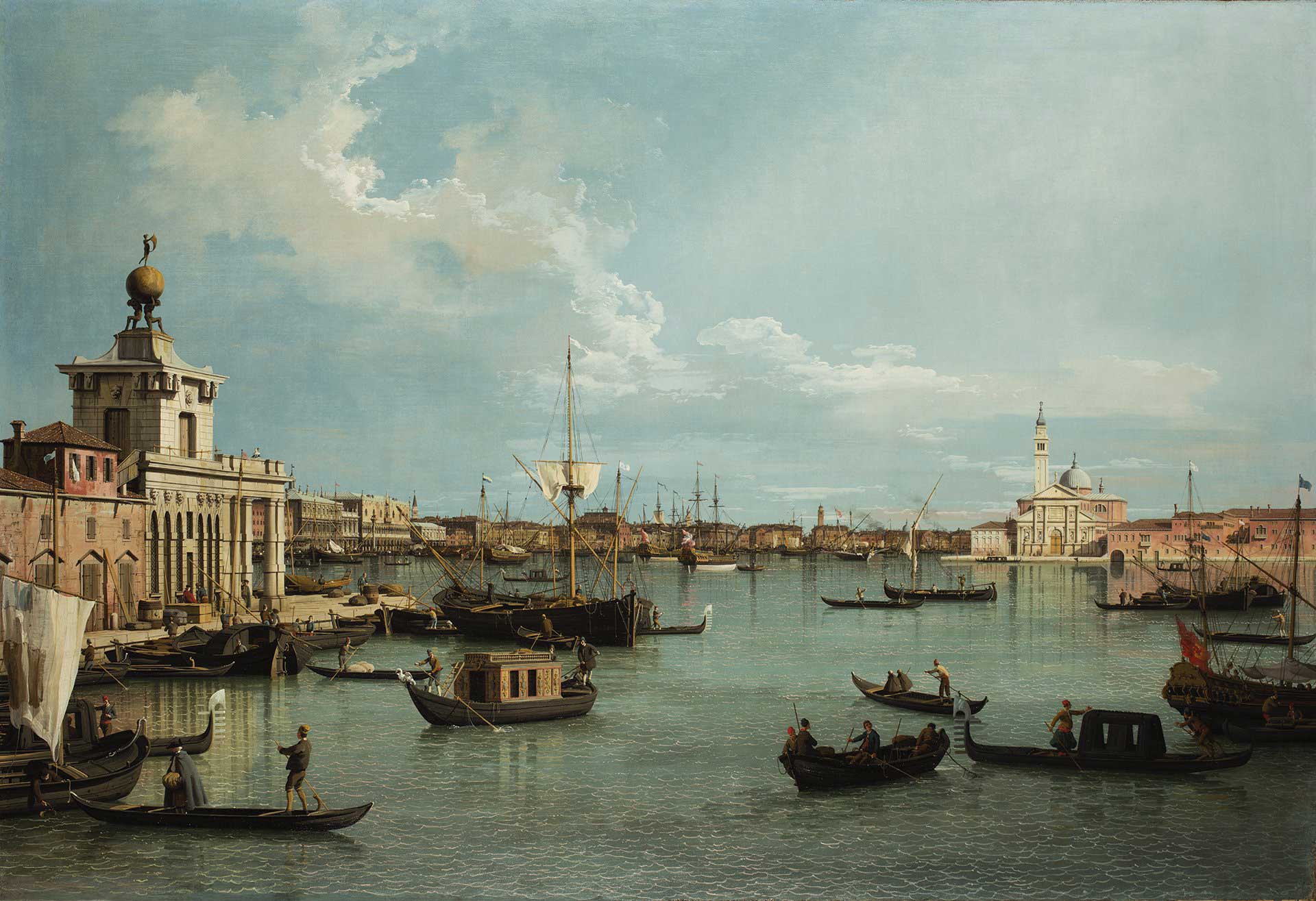
Venice moved to canvas around 1500 for practical reasons. As a maritime power it always had good sailcloth, and Venetian sail canvas was regarded as the best available. The city was also running short of timber, and large panels were expensive and difficult to build. Canvas could be rolled and shipped.
Venetian painters made canvas the main support in the city. Carpaccio was among the first to work mostly on canvas, and Titian, Tintoretto and Veronese followed at a scale that would have been very hard and costly on wood. Veronese’s Wedding Feast at Cana, painted for the refectory of a Venetian monastery, is more than six metres high and almost ten wide, the largest painting in the Louvre. Titian’s paintings reached patrons across Europe, including Philip II of Spain, because oil on canvas could be rolled and sent to other regions.
Florence was slower. When Botticelli painted the Birth of Venus around 1485, canvas was still unusual for a major painting there, and was used mostly for decorative pictures in private houses. His Primavera, painted a few years earlier, is on wood. Northern Europe kept wooden panels into the seventeenth century. Rubens painted some of his largest works on oak and also worked on canvas.
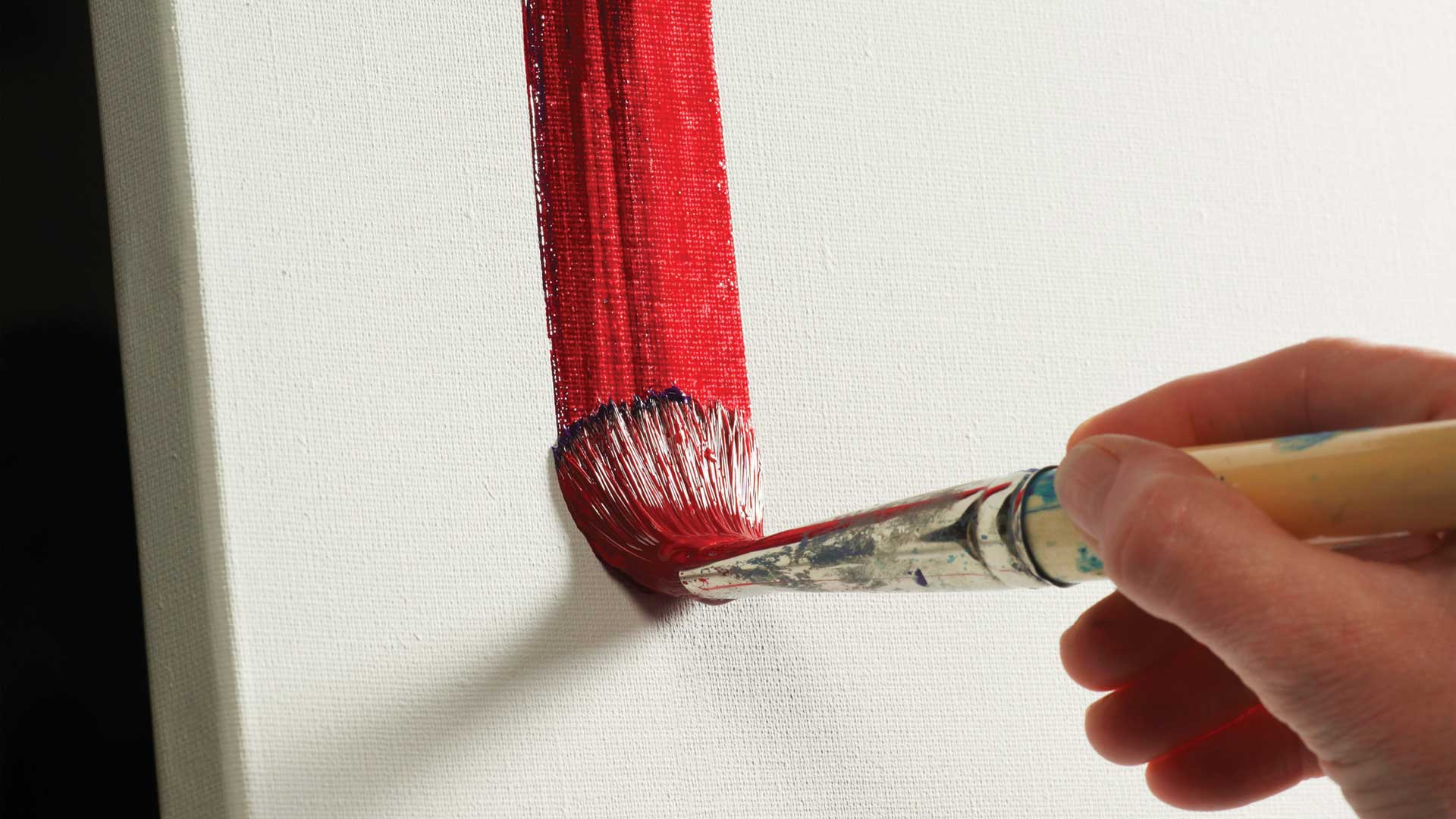
What is the difference between linen, cotton and jute canvas?
Linen is the strongest and most stable of the three. Cotton is more affordable, has an even weave and stretches easily. Jute is coarse, strongly textured and the least durable. The right choice depends on the size of the work, the paint you use and how long it needs to last.
Linen
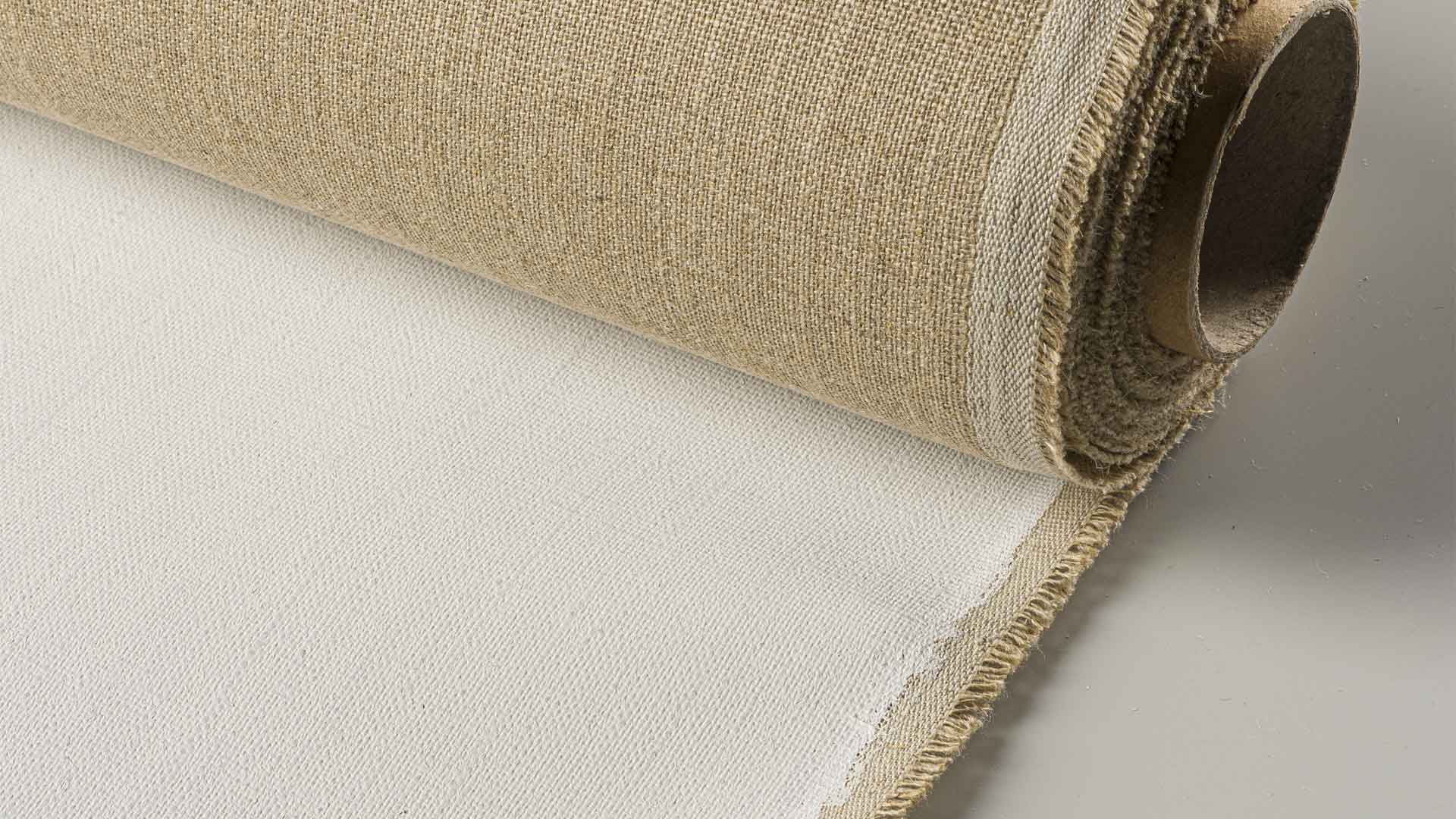
Linen comes from the flax plant. Its fibre is stronger than cotton’s, so the cloth holds its tension and is slower to go slack under heavy paint. It has carried oil paintings for centuries, and most top-quality flax is grown in Western Europe.
Cotton
Cotton came to painting late. The same French study found no cotton canvases before the end of the nineteenth century, and all-cotton canvas became common only in the twentieth, alongside acrylic paint. Cotton is weaker than linen, especially when damp, so heavier weights suit larger work. A well-primed cotton canvas is a reliable and economical surface for most painting.
Jute
Soon after he arrived in Arles in October 1888, Gauguin bought twenty metres of “very strong canvas”, as Van Gogh wrote to his brother Theo. It was coarse jute, and the two painters shared it. Van Gogh’s Portrait of Gauguin, now in the Van Gogh Museum, is painted on that jute, and the museum notes that the rough cloth led him to apply the paint thickly. Jute contains more lignin than cotton or linen, so it discolours and breaks down faster, which is worth knowing before you trust important work to it.
| Fibre | Strength | Texture | Price | Suitable for |
| Linen | Highest | Fine to coarse, slightly irregular | Highest | Oil painting, large work, pieces meant to last |
| Cotton | Good | Even, medium | Low | Everyday painting, studies, acrylics |
| Jute | Good | Coarse, pronounced | Moderate | Textured, expressive work |
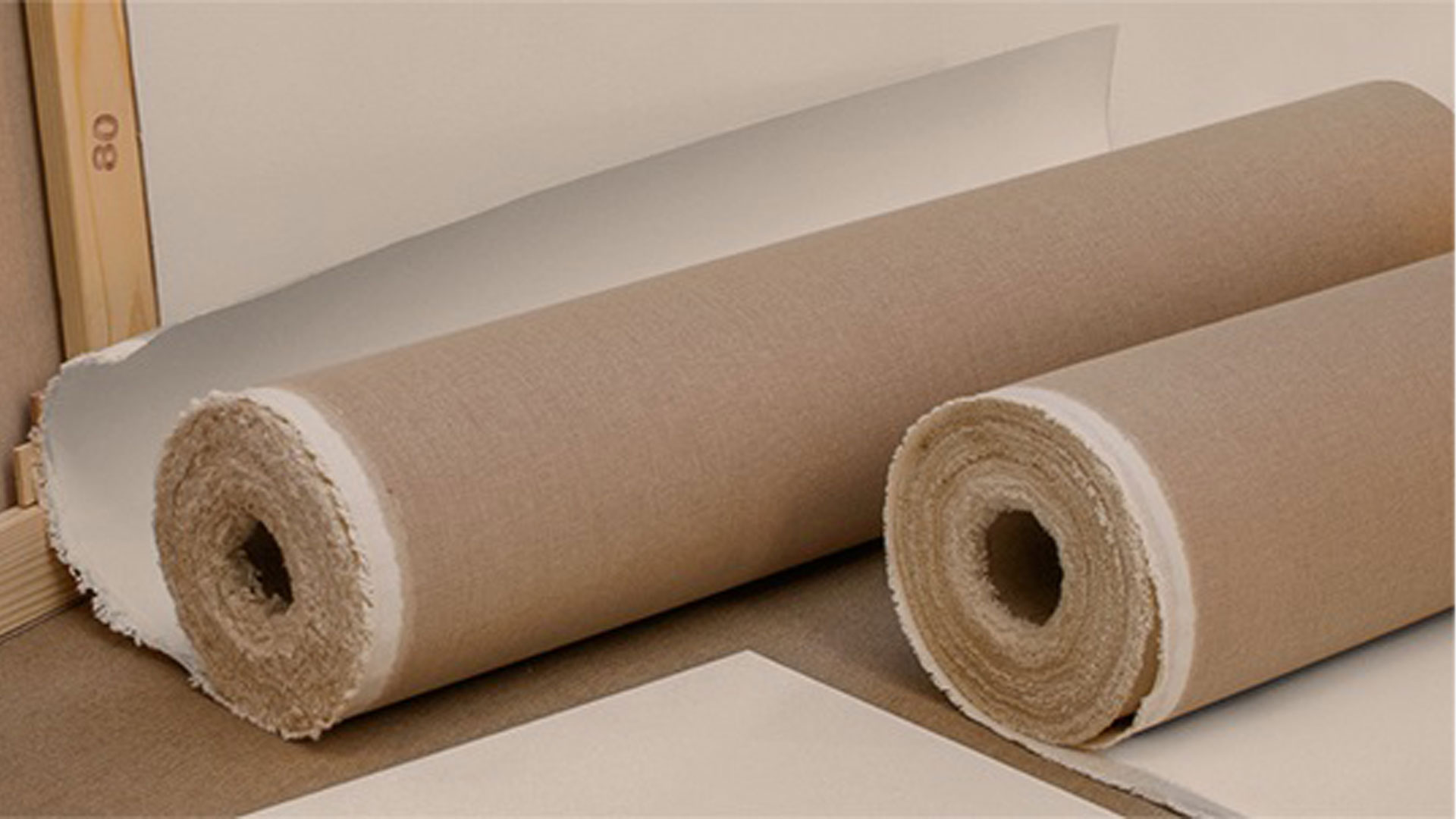
Which famous paintings are on canvas, and which are on wood?
Several of the most famous paintings in the world are on wood. The Mona Lisa is on a poplar panel. Van Eyck’s Arnolfini Portrait of 1434 is on three oak boards. Botticelli’s Primavera is on wood, while his Birth of Venus is on canvas. Titian’s Assumption of the Virgin (Assunta) in the Frari church in Venice, often described as a canvas, is oil on panel.
The wood explains how these works are kept. The Louvre notes that the Mona Lisa’s poplar panel has warped over the centuries and cracked, which is why it sits in a case with controlled temperature and humidity.
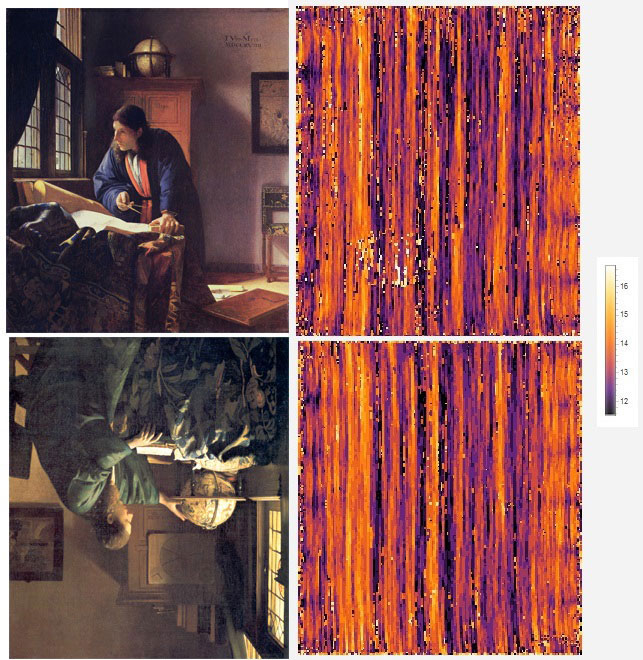
Canvas is useful to researchers in a different way. Looms leave small, regular variations in thread density along a roll, and X-rays of a painting reveal them. By matching these patterns, researchers showed that Vermeer’s Astronomer in the Louvre and his Geographer in Frankfurt were cut from the same bolt of cloth. The same method helped the Van Gogh Museum confirm a lost landscape, Sunset at Montmajour, in 2013, by matching its canvas to The Rocks, painted from the same roll that summer in Arles.
At the asylum in Saint-Rémy in 1889, short of canvas, Van Gogh painted on kitchen tea towels. He primed them like ordinary canvas, and a faint red woven pattern still shows where the paint is thin.
In the twentieth century the bare cloth became part of the picture. For Mountains and Sea in 1952, Helen Frankenthaler poured turpentine-thinned oil paint onto raw, unprimed canvas laid on the floor, so the colour soaked into the weave. Morris Louis and Kenneth Noland visited her studio soon after and developed the method in their own work. Later stain painters mostly used acrylic, which does far less harm to bare cotton than oil.
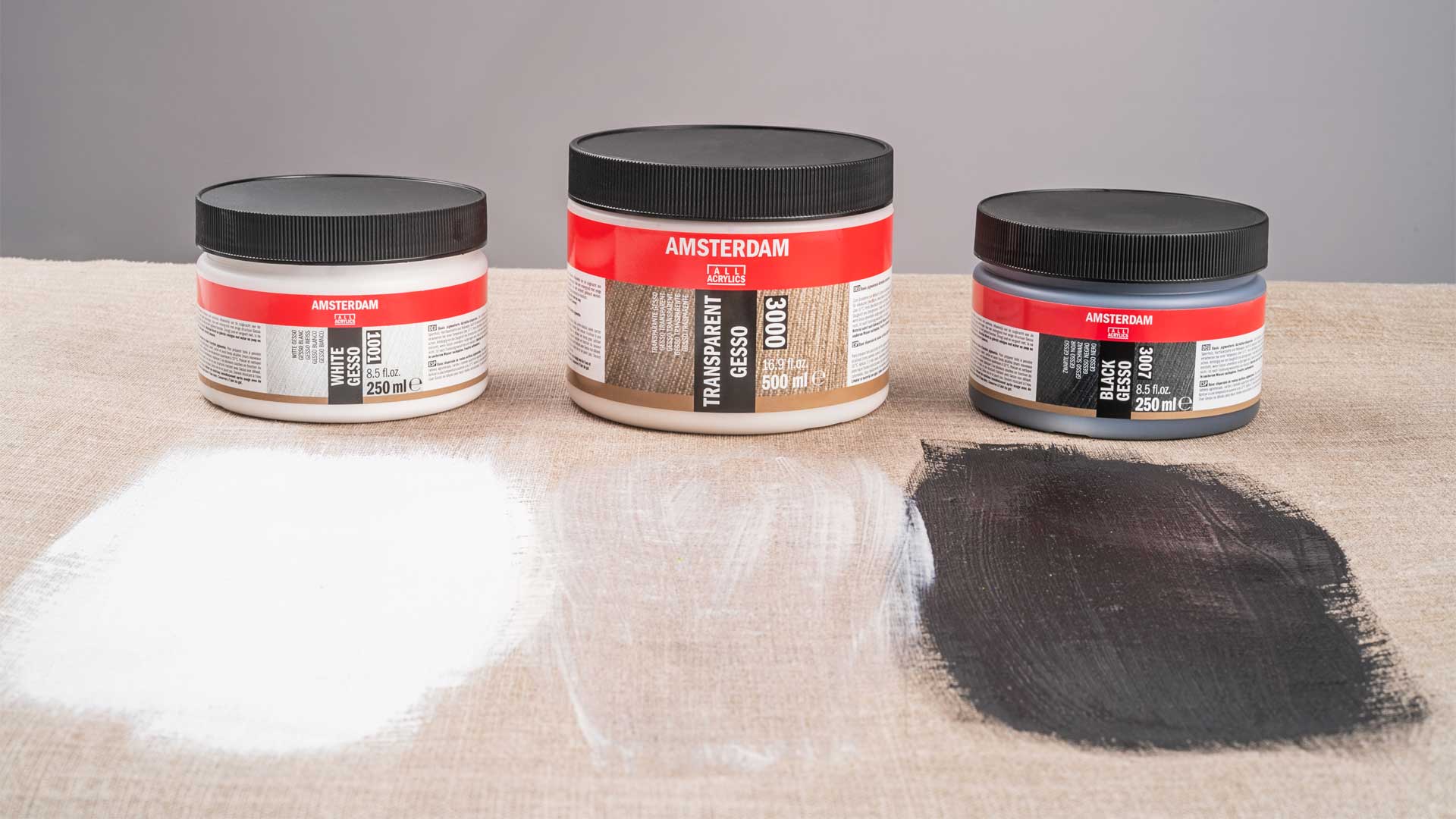
What does gesso do to a canvas?
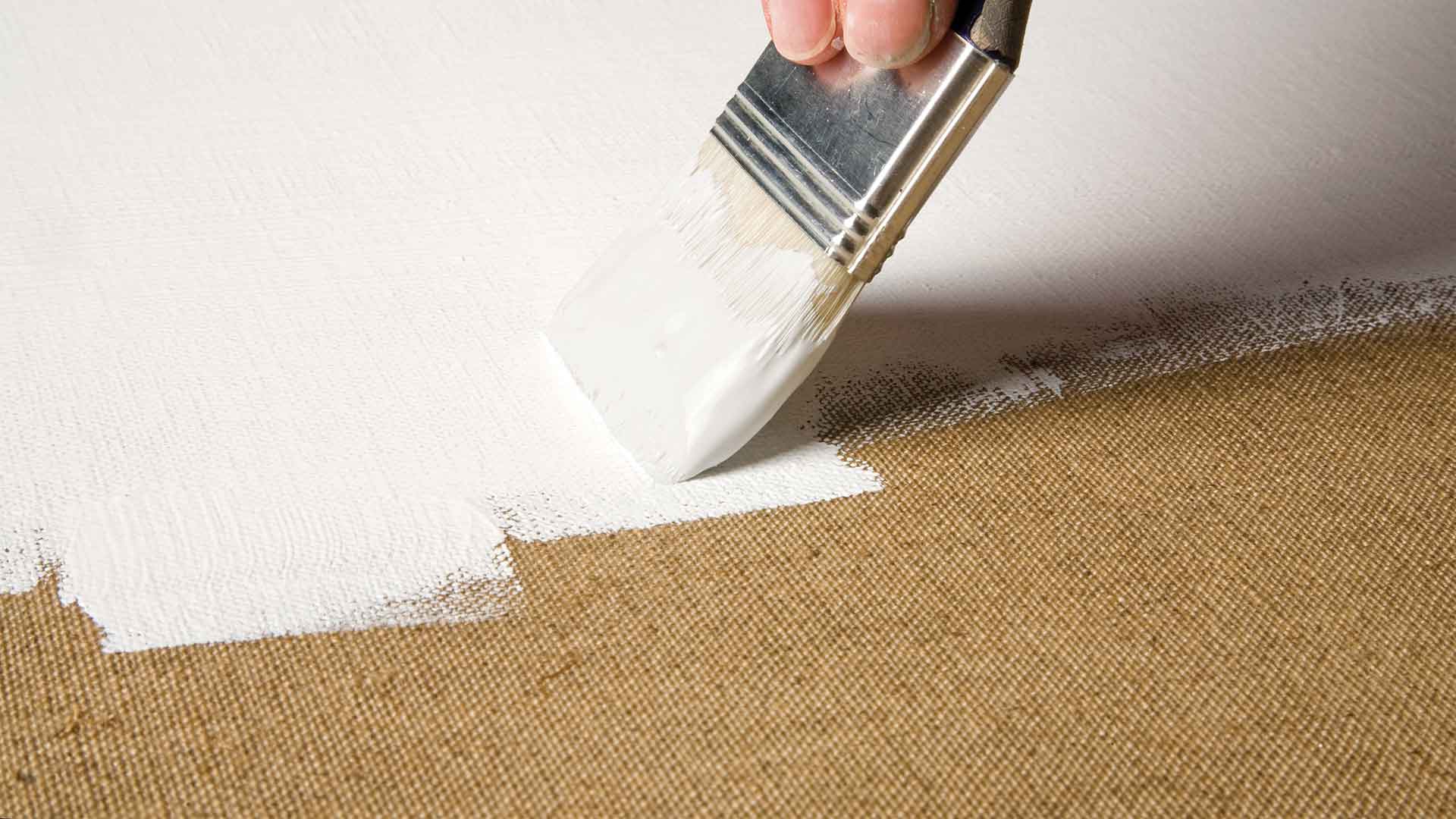
Gesso seals the cloth so paint sits on the surface instead of soaking into the fibres. Oil in direct contact with bare canvas eventually rots it. Painters traditionally sized canvas with animal glue and then applied a layer of chalk or lead white in oil. Most canvases today are primed with acrylic gesso, which suits both oil and acrylic.
Acrylic gesso is a mid-twentieth-century invention. Henry Levison, a colour chemist who ran Permanent Pigments in Cincinnati, produced the first commercial acrylic gesso in 1955 and named it Liquitex.
Unprimed canvas still has its uses. Some painters size and prime their own cloth to control how much it absorbs, and stain painters work straight into it. For oil, a primed surface is the safe starting point. Fibre, priming and the stretcher are also the three choices you make when you buy canvas.
Stretched canvas or canvas by the metre?
Stretched canvas arrives primed and tensioned, ready to paint. Canvas by the metre suits painters who stretch their own or need sizes outside the standard range. The choice comes down to how you work, the sizes you need and how much preparation you want to do yourself.
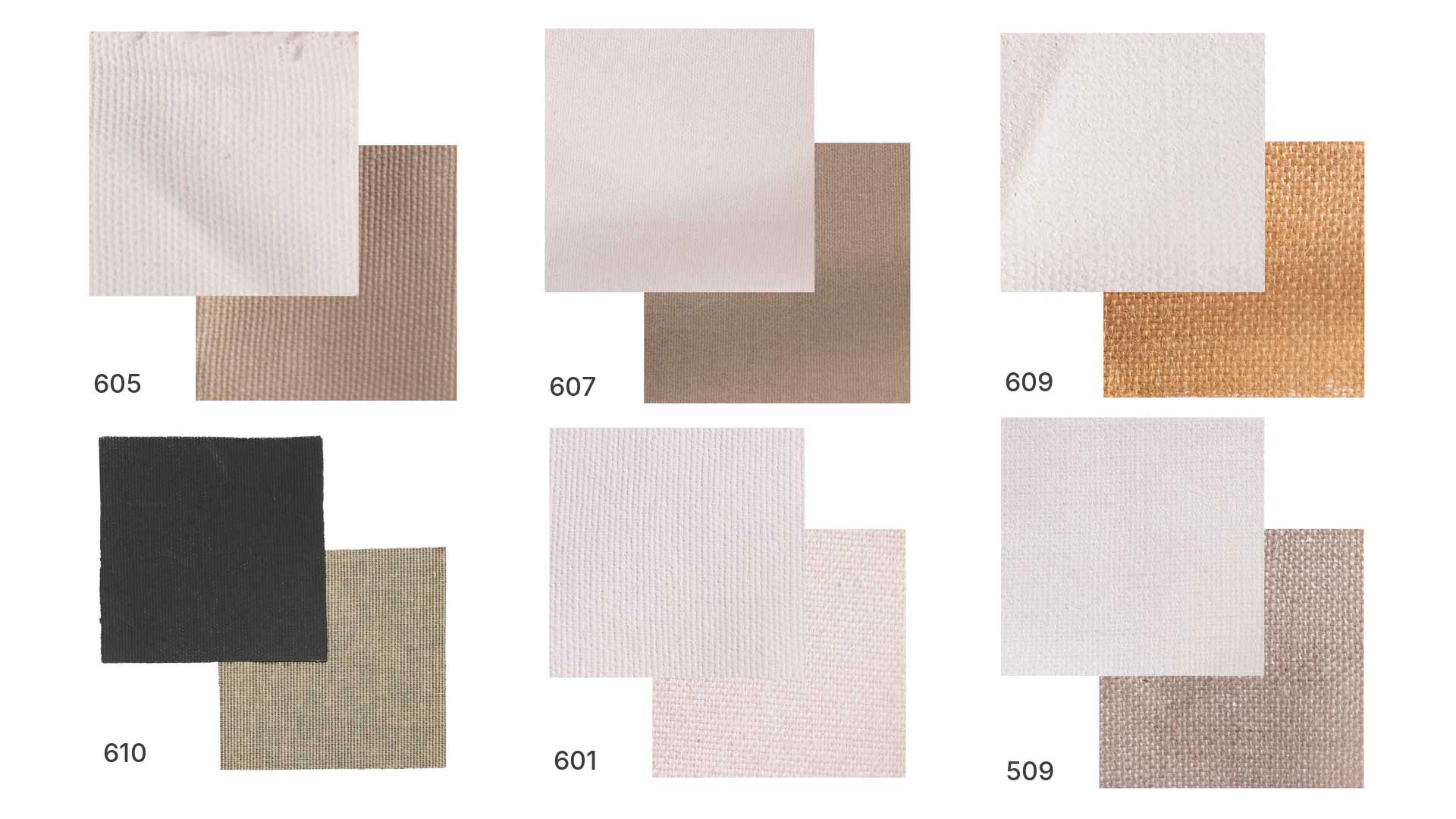
We have made our stretched canvases in our own workshop for over 40 years. The range includes:
- Cotton Canvas 605, our standard
- fine cotton 607, with a smoother weave for portraits and detail
- jute 609 for strong texture
- black cotton 610 for work built up from a dark ground
- European Canvas
- 100% linen 509
- There are also 3D versions on a deeper frame, which can be painted round the sides and hung without a frame.
For painters who stretch their own, we sell painting canvas by the metre, in cotton and synthetic. Because we cut and assemble every frame in the workshop, we also make stretched canvases to custom sizes. Send us the measurements you need.
Frequently asked questions
For work you want to last, yes. Linen is stronger than cotton and holds its tension better over time. For studies and everyday painting, a good cotton canvas performs very well.
Not for work you want to keep. Oil in direct contact with bare fibres slowly weakens them. Prime the cloth first, or buy it ready primed. If you want to keep the look and colour of the cloth, try Clear Gesso.
No. It is painted on a poplar panel, which has warped and cracked over time. That is why the Louvre keeps it in a case with controlled temperature and humidity.
Because Gauguin bought twenty metres of it in Arles in 1888 and the two painters shared it. The coarse cloth led Van Gogh to paint thickly, and jute is more fragile than linen.
Yes. Looms leave regular variations in thread density along a roll, and X-rays reveal them. The method has matched paintings by Vermeer and by Van Gogh to the same rolls.
Canvas stretched over a deeper frame, around three to four centimetres. The painting can continue round the sides, and the work can hang without a frame.
Something medium, around 30 × 40 to 50 × 70 cm. Large enough to work freely, small enough to finish.
Yes. We cut and assemble our frames in our own workshop, so we make stretched canvases to your measurements. Send us the size you need.
Sources
AIC Wiki. “Raw Canvas.” American Institute for Conservation. https://conservation-wiki.com/wiki/Raw_Canvas.
Wallace Collection. “Venice: the Bacino di San Marco from the Canale della Giudecca,” Canaletto, c. 1735–1744, P499. Through Art UK. https://artuk.org/discover/artworks/venice-the-bacino-di-san-marco-from-the-canale-della-giudecca-209527
Art & Object. “What Artists Used When Canvas Wasn’t an Option.” https://www.artandobject.com/articles/what-artists-used-when-canvas-wasnt-option.
Bailey, Martin. “Van Gogh and Gauguin’s Little Cat.” The Art Newspaper, 19 January 2024. https://www.theartnewspaper.com/2024/01/19/van-gogh-and-gauguins-little-cat.
Campbell, Lorne. “The Arnolfini Portrait.” Στο The Fifteenth Century Netherlandish Paintings. London: National Gallery, 1998, updated 2021. https://www.nationalgallery.org.uk/paintings/catalogues/campbell-1998/the-arnolfini-portrait.
Carbonnel, Katrina Vanderlip. “A Study of French Painting Canvases.” Journal of the American Institute for Conservation 20, no. 1 (1980): 3–20. https://cool.culturalheritage.org/jaic/articles/jaic20-01-001.html.
Cooch, Mary. “Assumption of the Virgin.” Encyclopaedia Britannica. https://www.britannica.com/topic/Assumption-of-the-Virgin-by-Titian.
Cornell Chronicle. “Lost van Gogh Painting Validated via Canvas Weave.” October 2013. https://news.cornell.edu/stories/2013/10/lost-van-gogh-painting-validated-canvas-weave.
Harper, Douglas. “Canvas.” Online Etymology Dictionary. https://www.etymonline.com/word/canvas.
Johnson, C. Richard, Jr., και William A. Sethares. “Canvas Weave Match Supports Designation of Vermeer’s Geographer and Astronomer as a Pendant Pair.” Journal of Historians of Netherlandish Art 9, no. 1 (Winter 2017). https://jhna.org/articles/canvas-weave-match-supports-designation-vermeer-geographer-astronomer-pendant-pair/.
Liquitex. “Our Story Since 1955.” https://www.liquitex.com/pages/our-story-since-1955.
Louvre. “From the ‘Mona Lisa’ to ‘The Wedding Feast at Cana’: The Salle des États.” https://www.louvre.fr/en/explore/the-palace/from-the-mona-lisa-to-the-wedding-feast-at-cana.
National Gallery of Art. “Mountains and Sea, Helen Frankenthaler.” Audio tour stop 31. https://www.nga.gov/node/856101.
Natural Pigments. “Canvas Supports for Painting.” https://www.naturalpigments.com/artist-materials/canvas-supports-painting.
Uffizi Galleries. “Birth of Venus.” https://www.uffizi.it/en/artworks/birth-of-venus.
Van Gogh Museum. “Portrait of Gauguin, Vincent van Gogh, 1888.” https://www.vangoghmuseum.nl/en/collection/s0257V1962.
Van Gogh, Vincent. Letter 717 to Theo van Gogh, Arles, on or about 3 November 1888. In Vincent van Gogh: The Letters. Amsterdam: Van Gogh Museum and Huygens ING. https://vangoghletters.org/vg/letters/let717/letter.html.
Wikipedia. “Canvas.” https://en.wikipedia.org/wiki/Canvas.
Wikipedia. “Panel Painting.” https://en.wikipedia.org/wiki/Panel_painting.
Wikipedia. “Venetian Painting.” https://en.wikipedia.org/wiki/Venetian_painting.
Winsor & Newton. “What Is the Difference between Cotton and Linen Canvases?” https://uk.winsornewton.com/blogs/guides/difference-between-cotton-and-linen-canvas.
The Walters Art Museum “Madonna and Child with Saints Bernardino and Anthony of Padua” https://art.thewalters.org/object/37.1033/
Last updated: October 2026